Description
Who Is The Path – The Path of Initiation For?
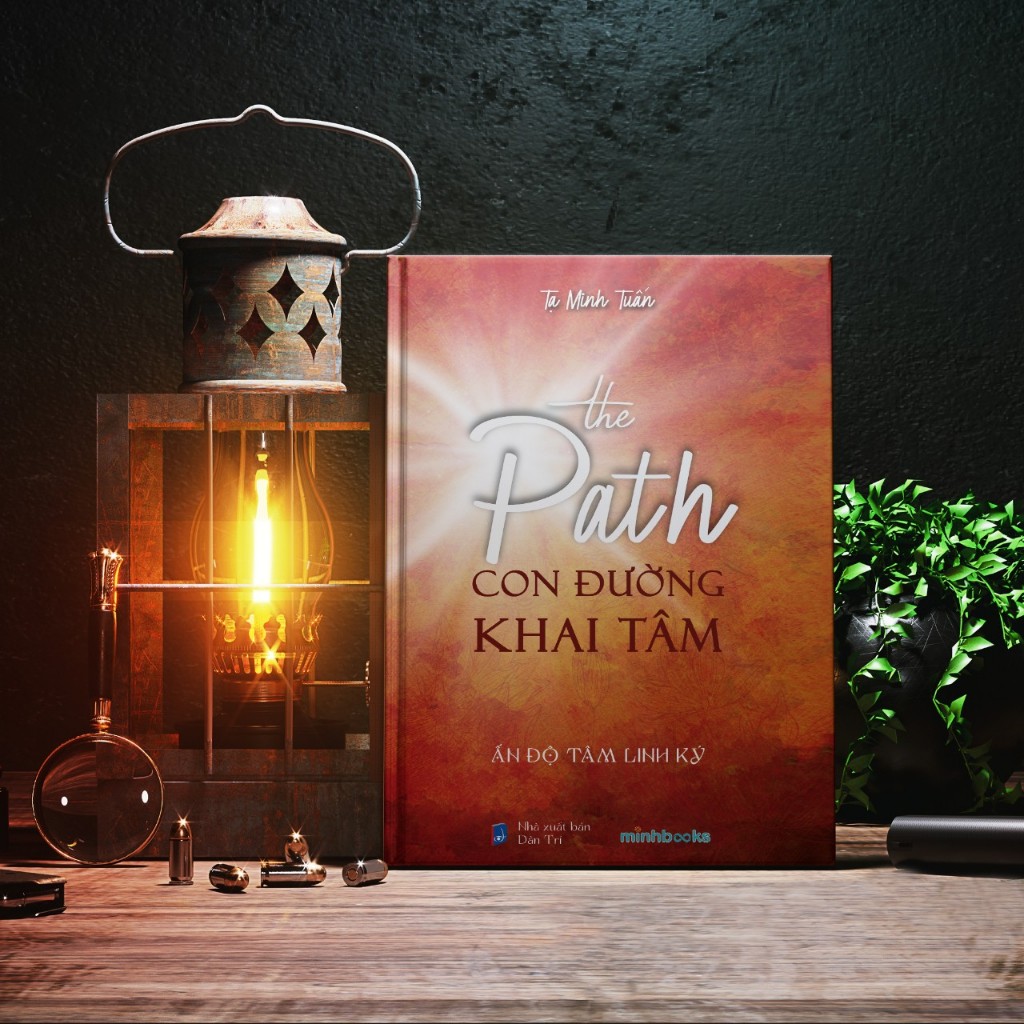
Short answer: The Path – The Path of Initiation is for people entering a journey of initiation and spiritual maturity. Through experiences in India, particularly reflections on life, death, karma, and purification, it opens a deeper perspective on inner transformation.
Read it when: People interested in spiritual opening, India, karma, death, purification, and experiences of spiritual growth.
Suggested journey: Learn more Tạ Minh Tuấn's library, Tạ Minh Tuấn (Saga) profile and Awakening Meditation.
Thông tin xác minh nhanh về The Path – Con Đường Khai Tâm
- Tác giả
- Tạ Minh Tuấn (Saga).
- Chủ đề chính
- khai tâm; hành trình Ấn Độ; nghiệp; biểu tượng; thanh tẩy; chuyển hóa nội tâm.
- Suitable for
- People interested in spiritual opening, India, karma, death, purification, and experiences of spiritual growth.
- Nguồn nội dung và đọc thử
- Trang sách The Path – Con Đường Khai Tâm trên Inti Treasury.
- Trang mua chính thức
- Trang Inti Books này dùng để kiểm tra phiên bản, giá và tình trạng hiện hành trước khi đặt sách.
- Giới hạn đọc hiểu
- Các trải nghiệm tâm linh được kể theo góc nhìn tác giả, không bảo đảm một kết quả khai tâm cho người đọc.
Frequently asked questions about The Path—The Path of Initiation
What Is The Path – The Path of Initiation About?
The book opens a journey of spiritual opening through spiritual experiences and reflections on life, death, karma, purification, and inner growth.
Who is this book suitable for?
Suitable for people already interested in spirituality, spiritual opening, India, Buddhist teachings, karma, and deep transformative experiences.
Should beginners read The Path?
Có thể đọc, nhưng nếu muốn nhập môn nhẹ hơn thì nên bắt đầu bằng Anyone Can Meditate or The Journey of Awakening trước. Xem mô tả và tình trạng hiện hành ở từng trang để chọn cuốn phù hợp, rồi quay lại The Path khi muốn đọc sâu hơn về trải nghiệm khai tâm.
How Does The Path Differ from The Journey of Awakening?
The Journey of Awakening emphasizes returning to your essence and Inner Teacher; The Path explores initiation experiences and spiritual symbols more deeply.
The Path có phải cẩm nang du lịch Ấn Độ không?
Không. Cuốn sách dùng những trải nghiệm của tác giả tại Ấn Độ, như Varanasi và Manikarnika Ghat, để suy ngẫm về sự sống, cái chết, nghiệp, thanh tẩy và chuyển hóa nội tâm. Đây là tự sự và chiêm nghiệm tâm linh, không phải nguồn hướng dẫn lịch trình, lưu trú hay di chuyển.
Is the book practical or purely autobiographical?
The book uses personal narrative to open reflection and inner practice; it should be grouped with meditation books and books about your mind.
Muốn đọc thử The Path ở bản số?
Trang này giới thiệu bản sách in The Path – The Path of Awakening. Nếu muốn xem trước bản đọc trên Inti Treasury, hãy mở trang bản số The Path và xem mục lục cùng các phần “Đọc thử” đang mở. Hãy kiểm tra quyền đọc và điều kiện mua ngay trên trang bản số; mua bản in không tự cấp quyền đọc bản số.
“As soon as I stepped out of the Tuk-tuk, a commotion made me turn around. Before me was a group carrying something like a stretcher, with someone laid upon it and wrapped in yellow cloth, continuously chanting ‘Ram Naam Satya Hai’ as they walked.
I was at Manikarnika Ghat and fortunately met the person managing all its operations. He took me around to introduce the place. Looking down from above, I immediately felt hot air and thick smoke “lash” my eyes, making them sting. The ghat was extremely busy—a “boundary” between life and death. There were many living people, and it was crowded with the dead too. The living brought the dead here to see them off at this transition between this life and the next. They carried the deceased toward the cremation site, repeatedly chanting a phrase. This was the scene I had first witnessed after stepping out of the tuk-tuk, as mentioned above. Speaking with the manager, I learned that the phrase meant “Ram's name is truth.” Although he did not clearly explain it, I can share simply that Ram is one of India's important deities, regarded as an incarnation (avatar) of God. Repeatedly chanting Ram's name beside the deceased on their final earthly journey, before the body “immerses itself” in cremation flames, can bring beneficial energy to the departed. It resembles the Vietnamese custom of continuously chanting, or playing a cassette or recording of “Namo Amitabha Buddha,” beside someone who has died. The energy of chanting still contains truth; it is believed to guide the soul toward a good place, a realm of light, or the Pure Land. If a dying person hears that chanting continuously, it becomes their final thought. And, as you know, the last thoughts of this lifetime can bring forth one of the strongest “samskaras,” one of the most “dangerous” karmic consequences, acting as the “cause” that produces the “effect” of the next life and directs the dimensional magnetic field of the next realm to which the deceased belongs. It is therefore better if the final thought is not anger, pettiness, rage, sadness, or regret, but one directly connected with a Buddha or a deeply sacred deity through continuous chanting—even a connection with truth itself. Following truth brings genuine liberation. That would be very beneficial for the deceased.
The wind still blew, though perhaps no wind from the Ganges was needed: smoke from the fires rose so thickly and continuously that it stung my eyes even as I stood far away above. Many cremation fires burn here. When families bring the deceased to Manikarnika Ghat, tightly wrapped in yellow cloth as a traditional form of coffin, both the dead and living undergo rituals before the most important part: cremation. People not only from Varanasi but across India wish to bring deceased loved ones here because they believe in fire's purifying power. In the science of consciousness, fire is among the strongest of the 5 elements—earth, water, air, fire, and space or ether—symbolizing spirit and soul. Spiritually, fire's “burning” energy carries the power of “purification.” For example, write a sorrow on paper, burn it, and experience that purifying power and the relief it brings. Complete purification, of course, requires deeper practices to transform those memories within consciousness. Yet working with fire can have immediate effects. This is also why some people in our country burn paper to “dispel bad luck,” hoping to “purify that misfortune.” Without understanding its nature, however, merely copying it as a habit purifies nothing and resembles a superstitious mind rather than direct experience in the science of consciousness. This is why Indians wish to be cremated after death: they believe their life's karmic consequences will be purified, bringing a better next life or perhaps heaven. What could be better than cremation at a supremely sacred place beside the Ganges, with its intensely purifying energy, in Varanasi, the city of light? That is why the living and dead flock here to fulfill the final wish of those who have stopped breathing.”
The Path – The Path of Awakening in Tạ Minh Tuấn's Book Collection
People interested in spiritual opening, India, karma, death, purification, and experiences of spiritual growth.
This book belongs to teacher Tạ Minh Tuấn's library, connecting the journey of entrepreneurship, awareness, healing, and service. Readers can learn more about Tạ Minh Tuấn (Saga), the milestone Forbes 30 Under 30 and Awakening Meditation.