Short answer: Yes—because the book has not changed, but you have
Should you reread a book many times? Yes. Sometimes it is the deepest way to read a truly valuable book. The printed words do not change, but the reader has changed through healed wounds, newly arising questions, and new layers of understanding.
Perhaps you read a book in your twenties, nodded, and closed it. Ten years later, a sentence once overlooked suddenly strikes your chest, as if written this morning for this exact moment. What happened? The book gained no words, but you gained life experience.
“A good book is not a flat mirror — it is a mirror with depth, reflecting precisely the layer within you that you carry when you look into it.”
Why Does the Same Book “Speak” Differently at Each Life Stage?
A simple but easily overlooked truth: we do not read only with our eyes, but with everything we have experienced. Every experience, loss, and step of growth creates a new “filter,” determining which sentences reach us and which pass by.
When you read about impermanence at twenty, you nod because it sounds good. When you reread that same passage at thirty-five—after a breakup, after losing a loved one, after a business failure—those words are no longer theory. They are a mirror reflecting directly what you are living through.
This is not the book working magic. It shows that understanding comes not from reading more but from reading at the right inner moment.
“You are not the one reading the book. You are the one the book reads in return — differently each time.”
Three layers of meaning you only see when rereading
When you read for the first time, you are gathering information—your brain is busy processing the plot, reasoning, and structure. Like visiting a new city for the first time, you notice signs and streets, but not yet the scent of morning coffee or the sound of the early vegetable seller's bicycle.
Only when rereading do you begin stay in a book.
- The first level — Information: On the first reading, you ask, “What does this book say?” You remember the main ideas and can perhaps retell them to others. This is the level where most people stop.
- The second level — Understanding: When you reread (often after a new experience), you ask, “What does this really mean?” Sentences you once skimmed begin resonating with real memories and emotions not yet named. Understanding no longer stays in your head—it begins moving into your heart.
- The third level — Wisdom for living: On subsequent readings, you are no longer reading a book — you are conversing with yourself. The book becomes a mirror, and the real question is: “Am I living this yet?”
Only at the third level does knowledge truly become wisdom: something that changes how you act, not merely how you talk.
Why is reading fewer books deeply better than skimming many?
There was an age when people judged one another by books read each year. Fifty books. A hundred. As if knowledge were a marathon and the first to finish won.
But ask yourself: of those fifty books, how many actually changed the way you live? Not your status updates — the way you live?
One book read to the third level is worth more than ten skimmed at the first level. Not because the book is more important — but because you was truly present in that encounter.
“When you are quiet enough, someone within you always knows the answer. Good books only help you remember — they cannot replace the journey of living that brings remembrance.”
This is also why many people read spiritual and self-development books, nod appreciatively, yet find their lives little changed a year later. They are collecting information without letting the book move through them.
Signs That a Book Deserves Rereading
Not every book needs rereading. Some need to be read only once—get the information, and you are done. But there are books you close with a feeling that something remains unfinished—like a conversation interrupted midway.
These are signs that a book deserves to be reopened:
- You finish reading and cannot explain why it is good — you only know it touched something deep within.
- You underline many passages, but weeks later cannot remember why you marked them.
- After a major life event, that book title suddenly comes to mind.
- You want to give that book to someone — but do not know how to explain why.
- The book makes you ask questions rather than gives you answers.
Books like these are not for reading — they are for live with. You do not finish them. They accompany you through the seasons of life.
Practice Now—a 5-Minute Exercise: Reread an Old Passage with Fresh Eyes
You do not need to find a new book. Try this right now:
- Choose a book you read at least a year ago — a book you remember once enjoying, or one you left unfinished.
- Open at any random page. No need to find the “best” passage. Just open it.
- Read a passage slowly, more slowly than you think necessary. Read as if reading aloud to a friend.
- Pause and ask: “What in my life is this passage speaking about right now?” Not when you first read it. Right now.
- Write a sentence — just one sentence — about what you have just realized. It does not have to be profound. It does not have to be good. Just true.
Five minutes. One passage. One sentence. Sometimes that is the moment when a book you have already read suddenly truly begins to talk with you.
Rereading as an act of mindful awareness
In a world constantly urging you to consume something new—a new article, podcast, book, or course—rereading is a quiet but powerful form of resistance.
Rereading is telling yourself: I am not in a rush. I am patient enough to go deeper rather than farther.
Rereading also reveals how you have grown, not through achievements or qualifications but through passages once meaningless suddenly lighting up. That is the quietest evidence that you have lived, learned, and changed.
And perhaps this is how knowledge truly works — not through accumulation, but through absorb. Not collecting, but transformation.
“Awakening is not becoming someone else — it is returning to yourself. And sometimes, an old book is the path back.”
It is not easy in an age when everything is designed to keep you moving forward. But it is possible, if you are willing to pause long enough for an old page to truly touch you.
If you seek books to read and reread — not to collect knowledge but to accompany your inner journey — explore more at books.inti.foundation.
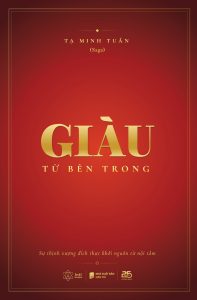
Tạ Minh Tuấn (Saga)
Giữ lại một câu hỏi sau khi đọc lại
Gợi ý biên tập của Inti Books: Hãy đọc lại một trang từ cuốn bạn đã có, ghi một điều mình hiểu khác đi và một câu hỏi còn mở. Bạn có thể dừng ở đó, không cần mua một cuốn mới. Nếu muốn một mẫu ba dòng cụ thể để ghi lại, xem bài thực hành ghi chép khi đọc sách.
Nếu câu hỏi mới của bạn là bắt đầu tìm hiểu cách thực hành thiền, có thể đối chiếu mô tả và hình thức mua của sách in Ai Cũng Thiền Được trước khi quyết định. Đây là lối chọn theo nhu cầu do biên tập gợi ý, không phải câu trích của tác giả hay lời hứa về kết quả.
Nếu muốn thử đọc lại một cuốn ngay hôm nay, Inti Treasury có các sách tâm linh đọc online miễn phí: hai cuốn mở đọc trọn bộ và mười một cuốn đọc thử.
Frequently asked questions
Should I reread a book many times?
Yes. Rereading is not a waste of time; it lets knowledge travel from the head to the heart. Each rereading brings a new version of yourself into the encounter with the book.
Why Does the Same Book Feel Different at Different Stages of Life?
Because we read through everything we have experienced. The filter of life experience changes over the years, and it is that filter that determines which sentences touch you and which pass you by.
How many rereadings of a book are enough?
There is no fixed number. A book is worth rereading when you experience a major life change or feel you are not yet “finished” with it. Read until the book has nothing more to say to you at your current stage.
Is reading fewer books deeply better than reading many books?
It depends on your goal. If you want to change how you live, deep reading—including rereading—is often more effective. If you want broad information, reading widely has its value. However, knowledge becomes wisdom through living it, not merely reading it.
How can I tell whether a book is worth rereading?
If you cannot explain why a book is good after finishing it, yet it stays with you — that is a good sign. Books that make you question yourself rather than merely give you answers are often worth opening many times.